
I Went To Kurayami Matsuri (Darkness Festival): Here’s What It’s Really Like
Last Updated on April 4, 2026 by Audrey
Curious about Kurayami Matsuri, the popular festival that takes place near Tokyo?

During my trip to Tokyo two years ago, I happened to be in the city while the festival was taking place. After doing some research beforehand, we decided to dedicate half a day to the festival.
There honestly wasn’t much information available at the time, so I wasn’t sure what to expect or whether it would be worth the commute from Tokyo. But I ended up having so much fun at this exciting and authentic festival. It truly felt like I was experiencing a local event, and if you've never attended a Japanese festival before, then it's worth going!
So if you happen to be in Tokyo when the festival takes place from late April to early May, here’s what it’s all about, what to expect, and how to get there!
SHORT ON TIME? Use these shortcuts to plan your Tokyo Trip
🏠 Book accommodation in Tokyo: My FAVORITE hotel in Shibuya is Shibuya Stream Hotel for its perfect location in Shibuya Station and beautiful panoramic city views!
🏔️ Find activities and tours for Tokyo: I LOVE this tour that takes you to see Mount Fuji, Oishi Park, and shopping at Gotemba Premium Outlets! It was one of my favorite activities in Japan.
🚌 Book the JR Pass and Tokyo Wide pass on Klook

Kurayami Matsuri - Everything You Need To Know
Let’s get into the details all about Kurayami Matsuri.
What Is Kurayami Matsuri? (Darkness Festival) くらやみ祭
So what is the Darkness Festival, and what makes it so special?
The event takes place in Fuchu, about 45 minutes to an hour from Shibuya, and runs every year from April 30 to May 6.
The festival lasts for several days, with events happening all day and night, although the rituals from April 30 to May 2 are closed to the public. It actually got its name because, in the past, the mikoshi (portable shrines) were carried in complete darkness during the festival. These days, the lights stay on and guide the way.
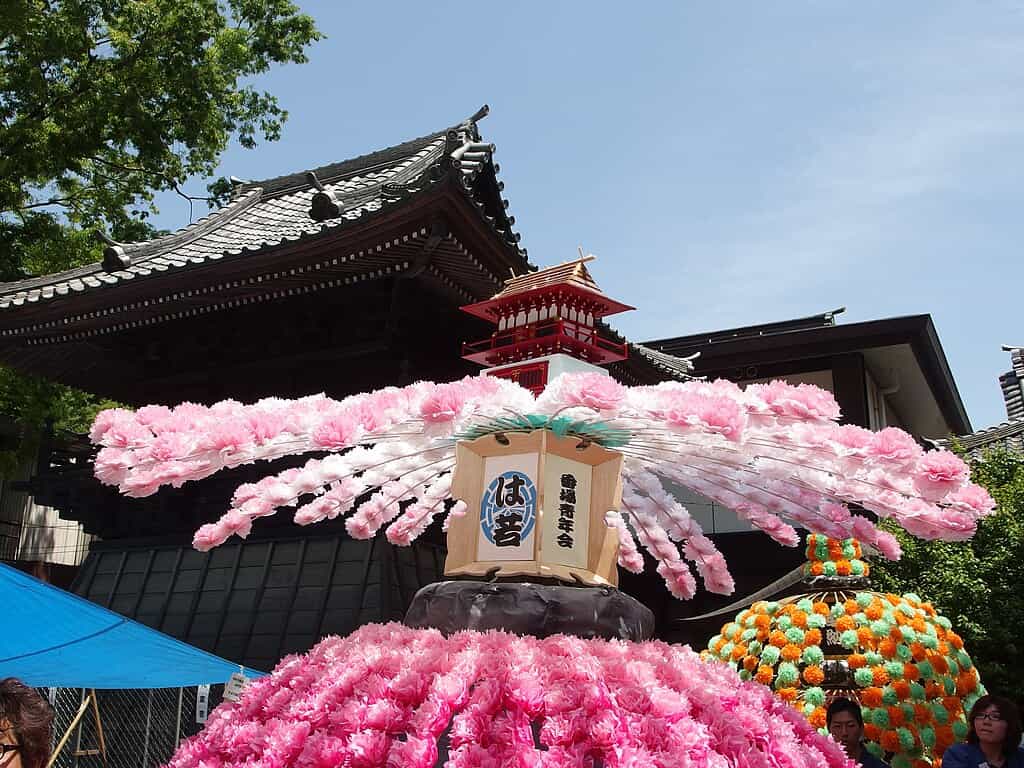
Photo Credit: Guilhem Vellut from WikiMedia
_@_Okunitama_Shrine_@_Fuchu_(14097704976).jpg#Licensing)
You can visit just to see the highlights of the procession, or you can come for multiple days.
Personally, I think one day is enough to get the full festival experience. We visited on May 5, which is said to be the most exciting day because of the Mikoshi togyo (portable shrine) procession, the most important event of the entire festival!
At 6 PM, a large drum performance signal a fireworks show and 8 oide (portable shrines) are led by bearers wearing white robes and large drums to Otabisho. Otabisho is the temporary resting place for mikoshi, and is situated at the intersection of the old Koshu-kaido and Fuchu-kaido roads.
Kurayami Matsuri Key Points
- The Darkness Festival takes place from April 30 to May 5 in Fuchu, a city 40 minutes from Shibuya (Tokyo)
- The public events take place from May 3 to May 6
- The most important day is May 5 at 6 PM for the Mikoshi Togyo. There is a drum beating, fireworks show, and 8 portable shrines are moved by shrine bearers to Otabisho.
My Personal experience with Kurayami Matsuri
In a one sentence summary, I think that the Darkness Festival was a super fun festival experience, and if you’ve never gone to experience an authentic Japanese festival, then it’s definitely worth the trip out. If you go, visit on May 5th to see the drum procession.
When we arrived, it was surprisingly packed! There were people of all ages enjoying the festival with their friends, and the entrance from the train station into the city was so crowded that it took a few minutes to get through.
Once we made it past the cramped gate and stepped into the heart of the festival, it felt like I was living out my anime dreams! About three to four blocks were closed off for the festivities, filled with tons of exciting stalls.


Things to Do At Kurayami Matsuri (Darkness Festival)
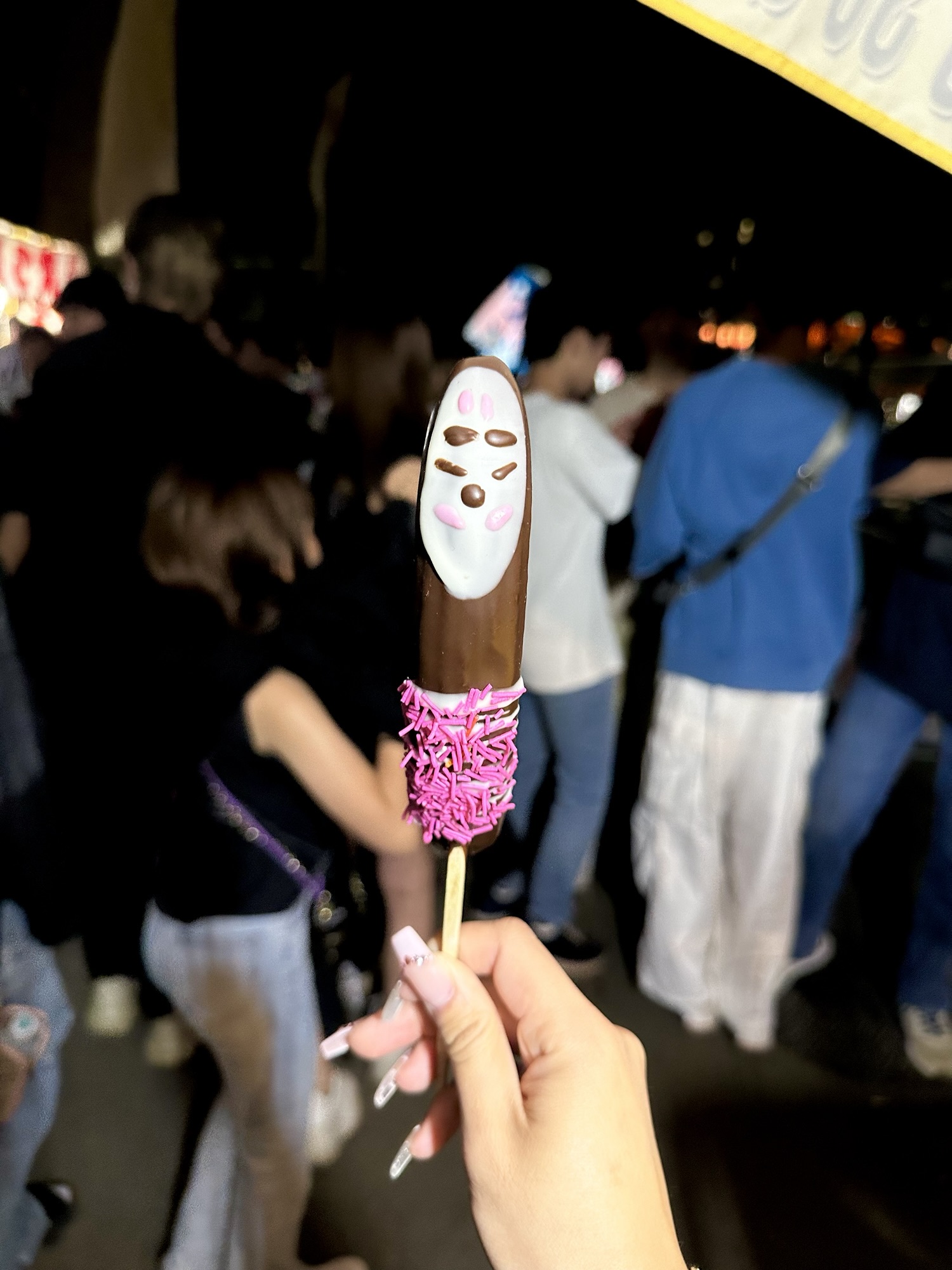
There were game stalls like goldfish scooping, a haunted house, basketball games, and mask stands. Not to mention the endless snack stalls serving street food like yakitori, chocolate bananas, tanghulu, yakisoba, you name it. You may also see a lot of horse racing events and accents, as this area was known for breeding horses in the past.
We ended up missing the float procession because there was so much going on and we couldn’t find our way, but we weren't sad about it because the area was so lively! M
y brother arrived around 4 PM and was able to see the floats, while we got there around 6 PM and stayed until about 9 or 10 PM. We spent our time praying at the shrine, watching a kabuki performance, and enjoying all the classic festival games and food.
Honestly, the festival ends early enough that you can get back to Tokyo and wander around Shibuya for the rest of the night.

Overall, it truly felt like an authentic festival experience, and I’m so glad I got to be part of it! I didn’t see many tourists, it was mostly locals, and the atmosphere was so buzzing and exciting.
👍 Pro tip: To pray at the shrine, follow these instructions: after making your offering in the box to the gods, bow deeply twice, clap twice, put your hands together and pray, and then bow one more time deeply.
Getting to Kurayami Matsuri
The easiest way to get to the festival from Tokyo is to take the train from Shibuya Station.
Traffic restrictions are in place during the festival, so it’s easiest to get there by public transportation.

Google Maps probably won’t be updated with the festival traffic restrictions. We were supposed to take the Nambu Line all the way to Fuchuhommachi Station, but one stop before Fuchuhommachi, the train stopped and started moving in reverse.
We ended up having to ask a station attendant which train to take, so if you’re confused, definitely ask for help!
- Fuchu Station - 5 min on foot
- Take the Keio Line
- Fuchuhommachi Station - 5 min on foot
- Take the JR Nambu Line or JR Musashino Line
Kurayami Matsuri Festival Schedule By Day
Here’s a rough schedule of the festival. Remember, the most important day to attend is May 5. You can refer to the Official Website for specific details.
May 3
- 13:00: Taiko performance by Musashi-Kofuku-Taiko
- 18:30: Musical performance with 22 decorated floats
- 20:00: Komakurabe horse-riding ritual
May 4
- 12:30: The Manto Festival.
- 13:00: Mikoshi will begin a procession.
- 17:00–18:00: A performance using large taiko drums in front of the shrine.
- 18:00–21:00: Dashi gyoretsu - 22 floats lit with lanterns will start a procession around the shrine.
May 5 (Most important day)
- 10:00: Start of the festival
- 14:30: Large taiko drums from the surrounding areas will converge at Ōkunitama Shrine.
- 18:00: The main part of the Kurayami Festival, Mikoshi Togyo, starts with a bang from three gun fireworks. 8 Oide (portable shrines) are transported and 6 big drums are beaten ferociously.
May 6
- 04:00: The Mikoshi departs the Otabisho at 4:00 on May 6 and continues until around 8:00.
Conclusion - Kurayami Matsuri
Overall, the festival was super fun and is definitely worth visiting if you’ve never been to a local festival before! If you’ve already been to a festival in Japan, the drum procession is still worth seeing but the festival is very packed, maybe due to its close proximity from Tokyo.
I hope you have a better understanding of what the festival is like and whether you want to visit or not! If you’re looking for other ideas of things to do while you’re in Tokyo, I recommend checking out my 6 Day or 4 day Tokyo itinerary.
Related Posts
1 comment
Comments are closed.